Thursday, July 9, 2009

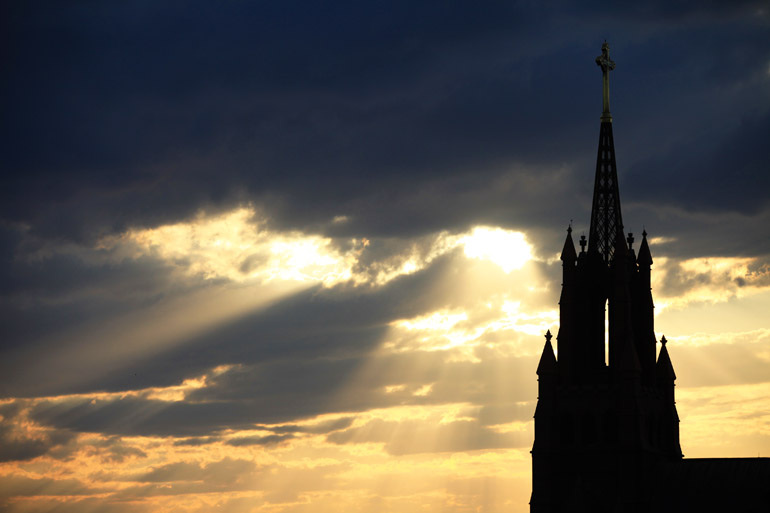
Photo | The sun rises over a flooded parking lot

sunrise_0152
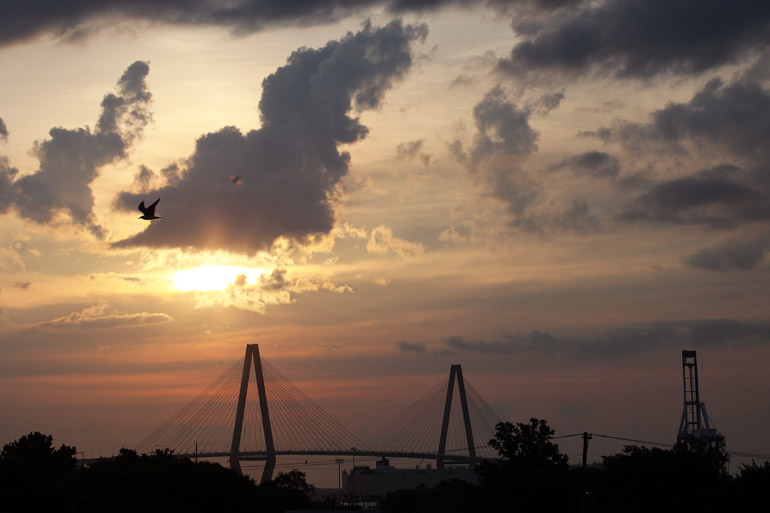
When I should have been sleeping, I took advantage of the rare privilege of watching the sun rise this morning. This shot was taken from the flooded grass parking lot of a Catholic church near Wickham Park in Melbourne.

A snapshot of the space station - solar arrays and all

ISS zoomed
You wouldn't know what it was unless I told you, but this really is the International Space Station.


As the International Space Station made another pass early Wednesday morning, I again attempted another time lapse, like these from Tuesday night. But when I realized that the lights of the city were causing too much interference, I changed tactics.

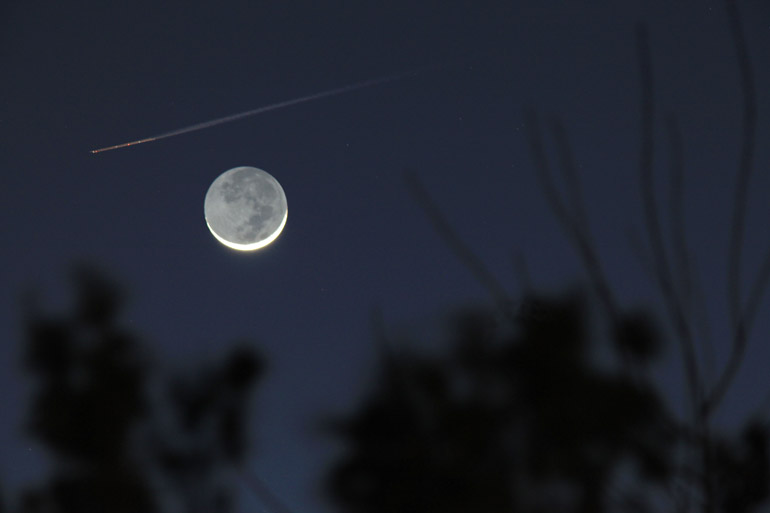
I quickly switched out my wide-angle Tokina for my telephoto Sigma, then focused the 500mm lens on Venus, one of the brightest objects in the night sky. With the lens focused, I could then try to shoot the space station as it zipped overhead at 17,200 mph.

There was no time to affix the camera to a tripod. At its highest elevation of 54 degrees, the station was its brightest. With less atmospheric distortion at the greater height, I knew that would be my only chance to photograph the station with a few quick snapshots.

The resulting image above is tightly cropped and enlarged. There's an incredible amount of interference surrounding the spacecraft, but you can still make out its central portion and, essentially, two adjacent blobs, each made up of two pairs of solar arrays. The fourth and final set was delivered after a beautiful launch of Discovery in March.

In the future, I might try a tripod, then combine all the resulting images in this free program called Lynkeos, which is meant for this type of astrophotography. Supposedly, it eliminates atmospheric distortion by layering different exposures. Sounds like a lot of work. Or, I might just get a telescope. And I might start playing the lottery in a desperate attempt to fund all of this.


space station no crop_0025
This is the original image. Even with my lens zoomed in at 500mm, the space station is just a tiny speck.

Tuesday, July 7, 2009

Space station photos don't show just a boring streak of light

International Space Station road_0039
In this first frame, a meteor shot downward just to the left of the space station. It was so faint, however, that I can't really see that the camera picked it up. The space station also is the faintest in this photo, just because I closed the shuttle too soon for fear of overexposing the image. The aperture was nearly wide open. This is looking to the west-southwest.

International Space Station dark_0040
As the station appeared from the cloud cover, it became more visible. It reached a maximum elevation of 48 degrees (it rose from 10 degrees above west-southwest, then descended to 11 degrees above north-northeast when it disappeared).


For two weeks, I've been waiting for this week, when the International Space Station was to be visible for up to five minutes several times from Monday through Friday. The lengthy period of its appearance and the reasonable time of day - around 9 p.m. - made it an especially attractive opportunity to see NASA's multibillion-dollar spacecraft fly overhead. It's frequently seen for only a couple of minutes in the early morning hours, about 5 o'clock.

NASA publishes the station's periods of visibility on this site about two weeks ahead of time. I often check it, so I was well aware of the upcoming celestial event.

Photographing the space station from the ground - with consumer-grade equipment, mind you - is a feat that has been pulled off, but one that frequently results in a boring image. What's so special about a timed exposure with a dark sky and a streak of white across it? I didn't think my own effort, which I attempted for the first time Tuesday night, would result in anything different.

But I was wrong. Luckily.

Thunderstorms have blanketed Central Florida this week, creating thick cloud cover. Thinking that would have blocked the space station from eyesight, I gave up on a chance to shoot it Monday. I was wrong, though, and when I walked outside my apartment, I saw the bright star-like object moving across the eastern sky. Unfortunately, I couldn't fetch my equipment in time.

So on Tuesday, I was prepared, no matter what. The station's 9:29 p.m. appearance was supposed to begin in the west-southwestern sky and end in the north-northeast. To get far away from the lights of Brevard County's cities, I traveled westward on U.S. 192, which connects Melbourne and Mickey Mouse's home. Out in the middle of nowhere, among the swamps and swarms of mosquitoes, I found a dirt road that was fenced off but offered enough room for my car.

It was more than an hour after sunset, but the clouds on the western horizon still glowed slightly with orange. About 10 degrees above the horizon, the point at which the station was to first appear, the sky was mostly clear. It was shaping up to be a little more interesting than just a streak in the dark.

I looked down at my cell phone clock. It was 9:29. Where was it? I looked up, and there it was. I opened the shutters on my two cameras, and let them do the work. The photos that turned out the best were taken with my Nikon D90, equipped with a 11mm Tokina lens, which makes the station look kind of small. Maybe I'll try more of a zoom in the future.

In hindsight, I should have left the shutter open for a longer span to get a longer streak. Even so, I'm pretty happy with these.


International Space Station fence_0041
For this photo, I followed the space station into the northern sky, and you can see the fence blocking the road in the foreground. I took one shot after this, but the station faded as it again drifted behind the clouds on the horizon.

International Space Station close_0007
This is one of the shots taken with my D40 backup camera. With the camera's 18mm lens, the streak is a little more visible.

Photos | Gators, pigeons and the people who feed them

alligator_0299
I was driving by Promenade Park in Melbourne on Monday afternoon, so I decided to stop to see if there was anything happening. I spotted this small alligator in Crane Creek. An orange and yellow medical office building on the opposite shore was being reflected onto the creek's surface, surrounding the gator with colors similar to its own skin.

wires_0294
The main attraction for the people, though, were the pigeons. They were scouting out the riverside boardwalk from the electric wires.

flock_0084
Then they flew around a bit.

bread_0156
And finally, they landed, attracted by the loaves of bread that a large family brought with it to feed them. The building in the background is the one that provided the colors in the alligator shot above.

flying_0077
The birds grouped around whomever had the most bread. So when they got startled and flew, it was a bit overwhelming for this girl.

watching_0235
Not sure why I focused on the girl in the background. In addition to feeding the pigeons, the children and adults threw bread to a school of large catfish and a few turtles that were swarming along the edge of the boardwalk. The aquatic life didn't show up well in the photos, though.

family_feeding_0107
The whole family got in on the act. They also tried to throw crumbs to the gator, but it was not biting.

stump_0324
A pigeon has flourishes of color, especially on its throat and feet, that can be pretty.

sky_0369
Overhead, two planes crisscrossed, making an X in the sky. I thought it was somewhat interesting.

Photo | A splash of color from a lizard's throat flap

lizard_0046
This brown anole lizard was hanging around in a park on the mainland end of the Melbourne Causeway.

Monday, July 6, 2009

Panorama | Calm, clarity in the middle of a thunderstorm

TwoStormPanoTease
Click here or on the image to see the full-resolution version on Flickr. I quickly shot 11 images for this panorama as a line of thunderstorms moved over the Space Coast on Saturday. The photos were taken from a wooden boardwalk to the beach at Patrick Air Force Base, between Cocoa Beach and Satellite Beach. In this 180-degree panorama, there is obvious distortion, especially along the shoreline. That also caused the center image to be slightly misaligned. But what I particularly enjoyed with this result is that it shows a downpour both to the north, off Cape Canaveral, and to the south, around Satellite Beach or Indian Harbour Beach. I was in the middle of these two points of precipitation and felt only a light sprinkle.

Photos | My first attempt at shooting fireworks (with a camera)

sparkles_0152
After a hiatus because of the recession last year, Cocoa Beach and Cape Canaveral put on a fireworks show just off Shepard Park. Near the famous Ron Jon Surf Shop, it is a popular spot for tourists in Cocoa Beach. I took Saturday off from work to get my first opportunity to photograph fireworks. In my hometown in rural Maine, there were no professional shows nearby on the Fourth of July. My family usually celebrated in its own way, with homemade explosives. And burgers and hot dogs, of course. Later in life, while working for various media outlets, I had never once gotten the night off from work. This year, that changed. (Shutter open for 1.4 seconds)

sunset_0008
I arrived in Cocoa Beach a few hours before the show, which was scheduled for 9 p.m. or thereabouts. After seeing a car with a shattered window and surrounded by police officers - an obvious theft in a rather deserted, albeit free parking area - I opted for paying $10 to park near the beach and under the lights. I wasn't about to leave equipment in my car, risking a break-in by some drunken revelers. Above, a group of college-age people were cooking beef and chicken under the largest American flag on the beach, just after sunset. "Everyone's taking pictures of our flag," one of them said. He also said that the flag almost didn't make it to the beach: It flew through the truck window and was run over on the way. He pointed out the tire marks, but I couldn't see them. Oh, the desecration.

flag2_0036
I planned to start the show with the flag in the foreground, lighting it by firing an external flash at some point during the exposure. The flash stopped the flag's waving motion, but overall, this composition was lackluster: The fireworks weren't reaching high into the air, so I decided to head for the shoreline. (Shutter open for 17.6 seconds)

girl_0045
I continued to use a flash when I reached the water, here lighting a child in the foreground. The child did not stand still for the entire exposure, but the flash makes that appear to be the case. (Shutter open for 15.3 seconds)

skateboarder_0050
This shot turned out OK. The boy walked down toward the water with his two skateboards. (Shutter open for 21.2 seconds)

surf_0071
I used the flash this time to light the water as it crept toward my tripod. Now that this photographic adventure is over, I wish I had done two things: shot video and moved my butt. I had planned to move around to get different angles on the display, so I didn't want to juggle a video camera, too. But seeing how I didn't move around too much, I wish I had: There might have been more opportunities than just a few people and that American flag to get some interesting foreground. (Shutter open for 6.7 seconds)

reflection_0062
At this point, I realized that the flash wasn't the proper route. The colors in the reflection might have been more brilliant if I hadn't used it for this photo. (Shutter open for 16.1 seconds)

reflection_0076
In a long exposure, it's difficult to make it seem as though everything is in focus. The constantly churning sea creates a motion blur that can't be avoided. In this photo, I like the streams of gold plunging into the Atlantic Ocean. (Shutter open for 5.7 seconds)

blue_0116
The fireworks were shot from an offshore barge. Other boats, appearing as points of light along the horizon of these photos, formed a perimeter around the barge. The display cost the cities of Cocoa Beach and Cape Canaveral about $53,000. (Shutter open for 3.3 seconds)

fireworks_0164
This is one of my favorites, just because the fireworks fill more of the frame and the streaks of light aren't too overexposed. (Shutter open for 1.7 seconds)

man_0156
Apparently, someone ventured out into the water to get a closer view. As for me, I stayed at the edge of the waves' reach. To protect the feet of my tripod from sand and salt, I fastened three Walmart shopping bags to them with rubber bands, creating plastic boots. Still, some sand - and of course, water - found its way in. (Shutter open for 3.7 seconds)

finale_0191
This was the last burst of the grand finale. In all, I took about 200 photos. I wasn't too impressed by any of them, but they were all so similar that I could not decide which ones should be highlighted here. The show was a great experience, though, one that I will learn from and use to improve future fireworks-shooting adventures. Here's hoping for another Independence Day off from work. (Shutter open for 3.2 seconds)

Sunday, July 5, 2009

Photos | Nature provides some of its own fireworks

beetle_0025
Ladies and gentlemen, the Beetle ... along the Pineda Causeway on Merritt Island.

shelf_0044
A lightning storm approaches the coast near Patrick Air Force Base in Brevard County, where I was hanging out Saturday, waiting to head to the man-made fireworks show in Cocoa Beach. I had to underexpose the foreground to get any detail in the clouds for this photo.

rain_0097
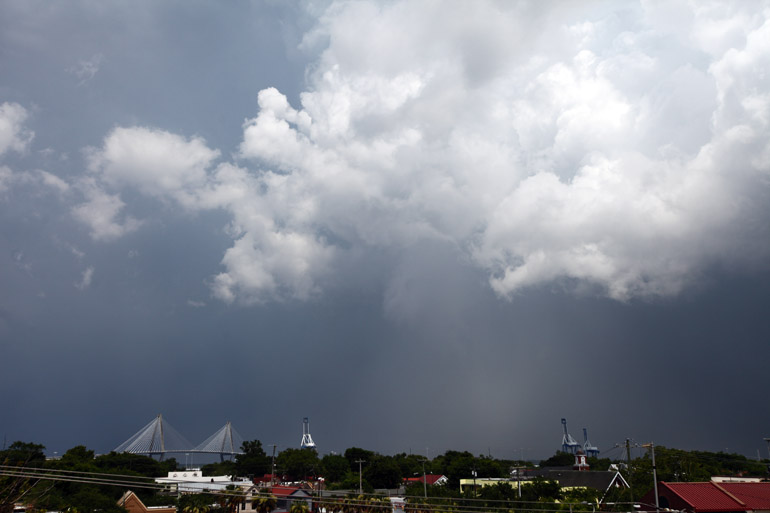
The clouds open up, pouring on Satellite Beach. Luckily, the storms moved away in time for nightfall, when the real show got under way. More to come later. ...

Saturday, July 4, 2009

Photos | The progression of cloud cover on a Florida evening

gazebo_0004
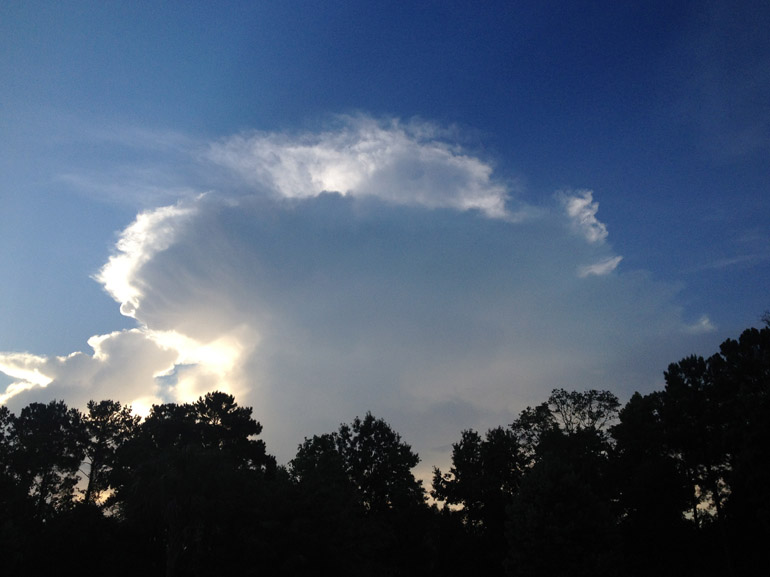
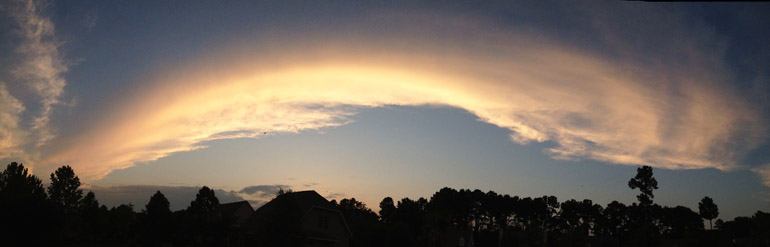
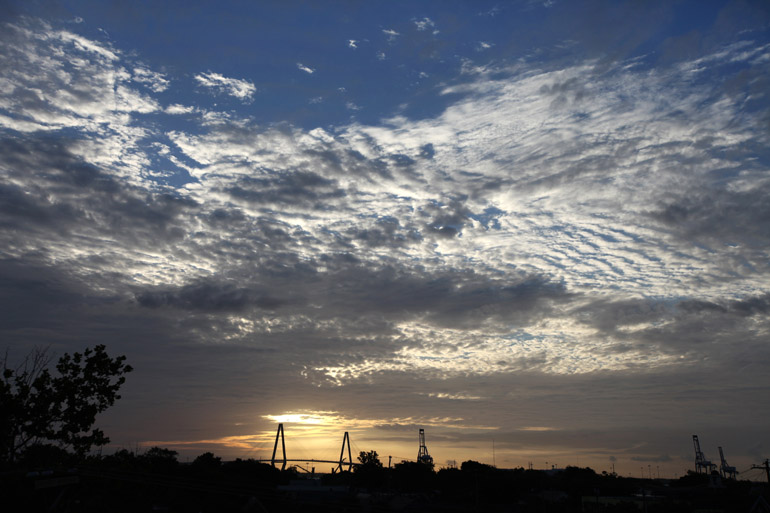
The outskirts of a severe thunderstorm grazed northern Melbourne, where I was working Friday evening. The sun broke over the clouds as they approached from the northwest.

clouds_0019
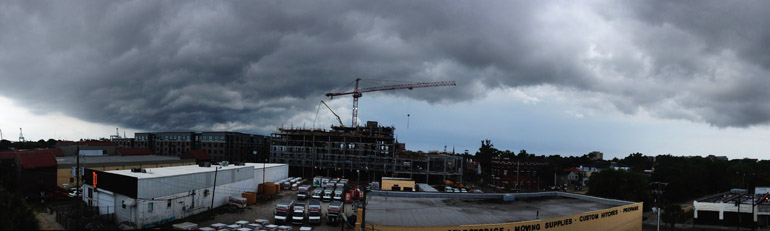
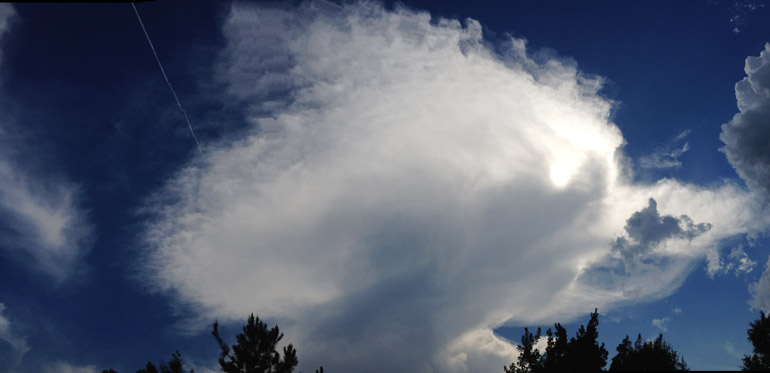
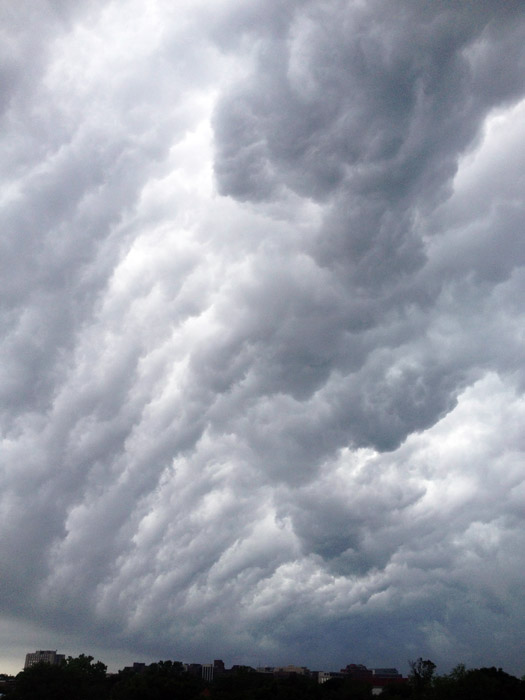
Later in the evening, some weak mammatus clouds hung from the deck.

building_0021
Nothing special here: just the outside of my Gannett workplace of FLORIDA TODAY, where several employees are expected to be laid off next week. How 'bout that economy, huh?

hydrant_0047
I went outside for one more time, just after the sun set at 8:23 p.m. It was starting to rain once again.

Tuesday, June 30, 2009

Panorama | Out for a good book; instead, a good storm

panoTease
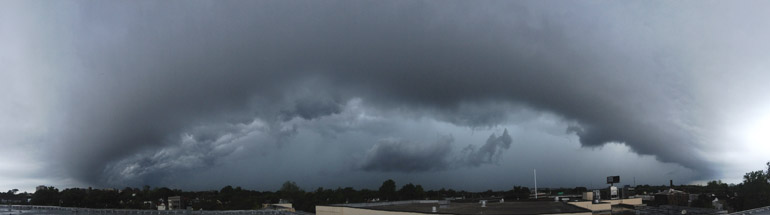
Click on the above image to go to the full-size panorama on Flickr. Using a tripod, I took 10 vertical photos at a focal length of 32mm, each overlapping slightly, then combined them in a free program called Autostitch. I had gone to Lake Washington to read a book and drink a milkshake as the sun went down Monday evening. Before I left home, the radar was pretty clear. But it's Florida, and the hot summer air tends to generate these storms pretty quickly. The milkshake was an expected treat that I drank during this unexpected one.

layers_0021
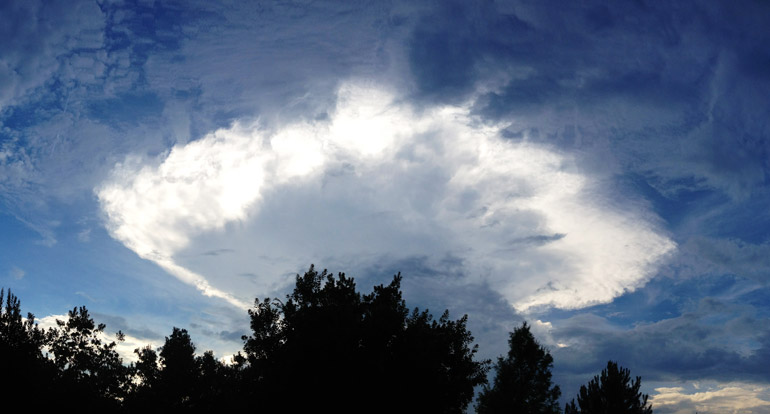
I took this very blue shot soon after arriving. It's zoomed in to show the layers of the clouds as the storm approached.

front_0052
The brunt of the storm passes just north of my position on the Melbourne lake. I took all of these photos with the camera on a tripod as I carried on a conversation with a beer-drinking storm watcher who said he used to operate a camera shop in town. I told him I just moved down to Florida a few years ago, and he apologized. Eh, but with storms like these, the Sunshine State isn't such a bad place.

boat_0055
Fishermen hurry in to the boat ramp just to the left of me. The bands of rain are visible on the horizon.

rain_0070
This very dark shot was taken just before I packed up and ran for my car. The far shore is no longer visible. Why? There's a wall of rain in the middle. It soon started pouring heavily, and lightning hit close to my car as I drove away. Then, I almost hit an extension ladder that someone apparently had lost in the middle of the road.

Monday, June 29, 2009

Photo | Going green

2puddle
This is another scene from the undeveloped portion of Palm Bay that I drove into last week as a thunderstorm approached. It's an HDR image stitched together from five photos of differing exposures, which permits the bright green in the foreground and the dark sky in the background.